
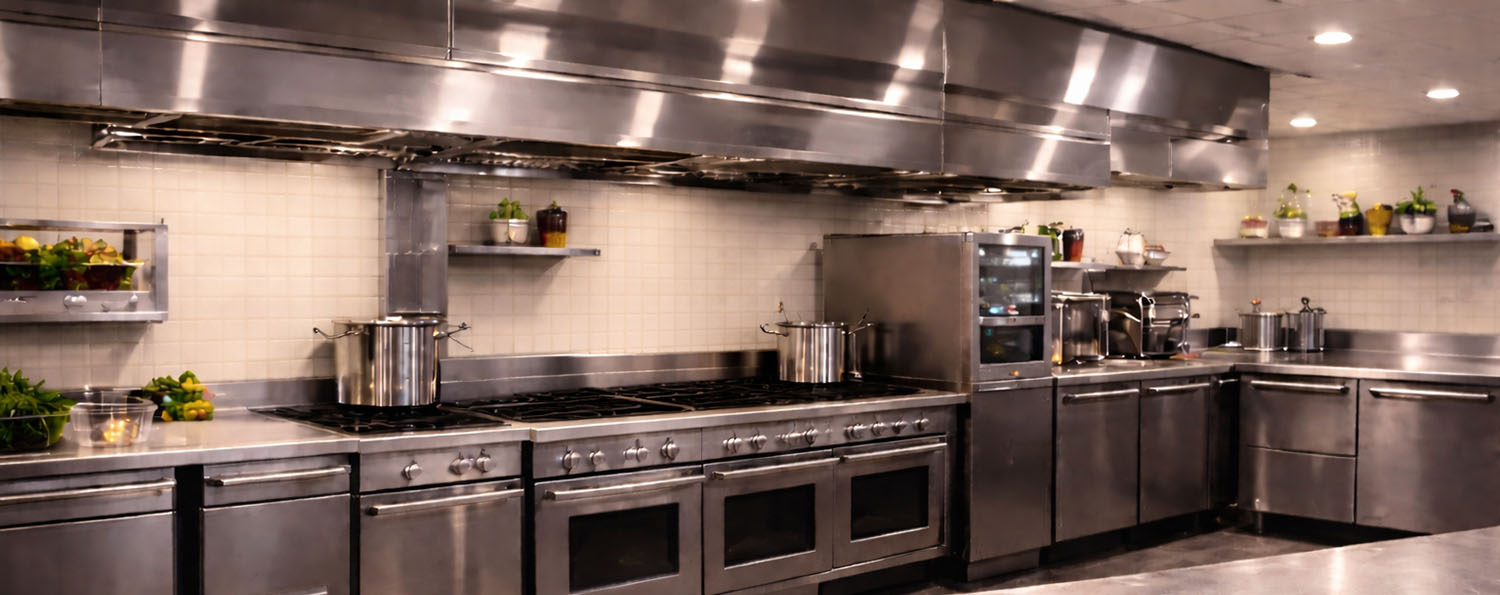
Creating the Perfect Workflow in Your Commercial Kitchen: Design and Layout Tips
A commercial kitchen is more than just a room with appliances; it’s a dynamic environment where speed, safety, and efficiency directly impact your profitability and customer satisfaction. A well-designed kitchen layout facilitates a seamless workflow—the organized path that food, staff, and materials take from delivery to plate.
For restaurant owners, cafe managers, and food service operators, investing time in optimizing this flow is one of the most impactful decisions you can make. This article breaks down the core principles of commercial kitchen design to help you create a space that empowers your team and streamlines your operation.
Understanding Kitchen Workflow: The "Back-of-House" Highway
At its core, efficient kitchen workflow is about minimizing unnecessary movement. Every extra step a cook takes to retrieve a pan, walk ingredients to a station, or dispose of waste adds time and fatigue, slowing down service during peak hours. The goal is to create a logical, sequential path that mirrors the food preparation process.
Think of your kitchen as having a one-way street system. The main "traffic" flows in a cycle:
- Receiving (Delivery doors)
- Storage (Dry storage, refrigerators, freezers)
- Preparation (Prep tables, sinks)
- Cooking (Ranges, ovens, fryers)
- Assembly (Pick-up window, expo station)
- Cleaning (Dishwashing area)
A good layout ensures these zones are adjacent in the correct order, preventing cross-traffic jams where a server carrying dirty dishes collides with a cook rushing to the walk-in cooler.
Key Layout Models: Finding Your Kitchen's Blueprint
Most commercial kitchens are based on a few fundamental layout models. The best choice depends on your menu, space, and volume.
- The Assembly Line Layout:
Ideal for kitchens with a high-volume, limited menu (like fast-casual or event catering). Stations are arranged in a straight line in the exact order of operations. This supports a linear, rapid flow perfect for consistent plate building. - The Island (Gallery) Layout:
A central cooking "island" is surrounded by other stations. This is common in open kitchens and allows for better communication and supervision. Chefs have access to tools from all sides, but it requires ample square footage. - The Zone Layout:
The kitchen is divided into dedicated, self-contained stations (e.g., salad station, grill station, dessert station). This works excellently for full-service restaurants with diverse menus, as specialized teams can work without interfering with each other.
Essential Design Principles for Optimal Flow
Beyond the overall model, several universal principles should guide your planning.
1. Adhere to the "Work Triangle" Concept (Adapted for Commercial Use):
In residential design, the fridge, sink, and stove form a triangle. In a commercial setting, think in terms of key activity triangles within each station. For example, at a sauté station, the chef should be able to pivot easily between the range, a lowboy cooler (under-counter refrigeration) for ingredients, and a landing counter for plates—all within a few steps.
2. Implement Strategic Zoning:
Separate your kitchen into clear, distinct zones to prevent cross-contamination and confusion:
- Cold Zone: For receiving and dry/cold storage.
- Prep Zone: For washing, cutting, and mixing ingredients.
- Hot Zone: For all cooking equipment.
- Assembly Zone (The "Expo" Area): Where finished dishes are plated and checked.
- Clean Zone: The dishwashing area with its own dedicated traffic path for dirty dishes.
3. Prioritize Ergonomic Equipment Placement:
Ergonomics is the science of designing the workplace to fit the user, reducing strain and injury. Apply this by:
- Placing heavy equipment like mixers on stable, waist-height counters.
- Ensuring oven doors and cooler drawers have ample clearance to open without blocking walkways.
- Installing adjustable shelving so frequently used items are within the "golden zone"—between the hip and shoulder, minimizing bending and reaching.
4. Plan for the "Landing" and "Staging" Spaces:
A landing space is a clear counter area immediately next to an appliance (like an oven or dishwasher) where hot items can be safely placed. Staging refers to designated areas for items waiting for the next step, like prepped ingredients ready for cooking or finished plates ready for servers. Without these, counters become chaotic, and workflow grinds to a halt.
5. Select Durable, Appropriate Materials:
The surfaces you choose must withstand the environment. Stainless steel is the industry standard for most countertops and backsplashes due to its durability, non-porous nature, and ease of cleaning. For flooring, commercial-grade anti-fatigue mats in key standing areas can reduce staff leg and back strain over long shifts, while non-slip, sealed flooring is a non-negotiable for safety.
The Impact of Good Design
A kitchen with intelligent workflow directly contributes to:
- Increased Speed of Service: Reducing steps shaves seconds off every order.
- Enhanced Safety: Clear paths and proper zoning reduce collisions, spills, and burns.
- Lower Labor Costs: Staff can accomplish more with less effort and fatigue.
- Improved Staff Morale: A logical, well-equipped kitchen is a less stressful place to work.
- Reduced Waste: An organized flow makes inventory management and sanitation more effective.
Designing for optimal workflow requires a deep understanding of both culinary operations and construction logistics. At PKNW Construction LLC, we partner with food service professionals to analyze their unique operational needs and translate them into efficient, buildable kitchen designs.
If you’re planning a new build or a kitchen remodel, considering these workflow principles from the outset is crucial. For more detailed advice tailored to your specific concept and space, our team is ready to help. You can reach out with any questions about kitchen design, or if you’re ready to begin planning your project, request a quote directly through our website at https://www.pknwconstruction.com/contact_us/index.htm. Let us help you build a kitchen where efficiency is always on the menu.