Sustainable Commercial Kitchen Practices: Reducing Waste and Energy Consumption
In today’s competitive foodservice industry, going green is no longer just a trend—it’s a smart business strategy. For restaurant owners, facility managers, and hospitality operators in the Portland, Oregon metro area, adopting sustainable commercial kitchen practices offers a powerful way to reduce operational costs, meet growing consumer demand for eco-conscious businesses, and contribute positively to our local environment. This article explores practical, actionable steps to minimize waste and energy consumption, turning your kitchen into a model of efficiency and responsibility.
Why Sustainability Makes Business Sense
A "green" kitchen directly impacts your bottom line. Energy-efficient appliances consume less electricity and gas, lowering utility bills. Waste reduction strategies cut down on disposal costs and can even generate revenue through composting or recycling programs. Beyond economics, sustainability strengthens your brand. In a community like Portland, where environmental stewardship is highly valued, demonstrating a commitment to green practices builds customer loyalty and can provide a competitive edge.
Key Areas for Sustainable Improvement
1. Energy Efficiency: The Heart of an Eco-Friendly Kitchen
Commercial kitchens are energy-intensive. Targeting efficiency here yields significant savings.
- High-Efficiency Equipment: Look for ENERGY STAR® certified commercial appliances. This rating, a government-backed symbol for energy efficiency, means the appliance meets strict performance standards. Upgrading an old walk-in cooler or convection oven to an ENERGY STAR model can reduce its energy use by 10–30%.
- HVAC and Ventilation Optimization: Your kitchen’s hood exhaust system is a major energy user. Installing variable-speed hood controls that adjust airflow based on cooking activity (instead of running at full power constantly) can lead to dramatic savings. Regular maintenance of filters and ducts also ensures systems aren’t working harder than necessary.
- Intelligent Lighting: Switch to LED lighting. LEDs use at least 75% less energy and last 25 times longer than traditional incandescent bulbs. Incorporate sensors or timers in storage areas to ensure lights are only on when needed.
2. Water Conservation: A Precious Resource
Water is used for cooking, cleaning, and sanitation. Conserving it is both eco-friendly and cost-effective.
- Low-Flow Pre-Rinse Sprayers and Faucet Aerators: A standard pre-rinse sprayer uses about 4 gallons of water per minute. An efficient model uses 1.6 gallons or less, saving thousands of gallons annually. Aerators mix air with water, maintaining pressure while using less water.
- Efficient Dishwashing Practices: Only run dishwashers when fully loaded. Scrape plates instead of rinsing them under running water before loading. Consider a high-efficiency dish machine that filters and reuses final rinse water for the next cycle’s pre-rinse.
3. Waste Stream Management: From Trash to Resource
The EPA estimates that the foodservice industry generates a significant portion of commercial waste. A robust waste management plan is crucial.
- The Waste Hierarchy: Reduce, Reuse, Recycle, Compost:
- Reduce: Source ingredients carefully to minimize spoilage. Implement inventory management to use products before they expire.
- Reuse: Opt for reusable containers, dishware, and linens where possible.
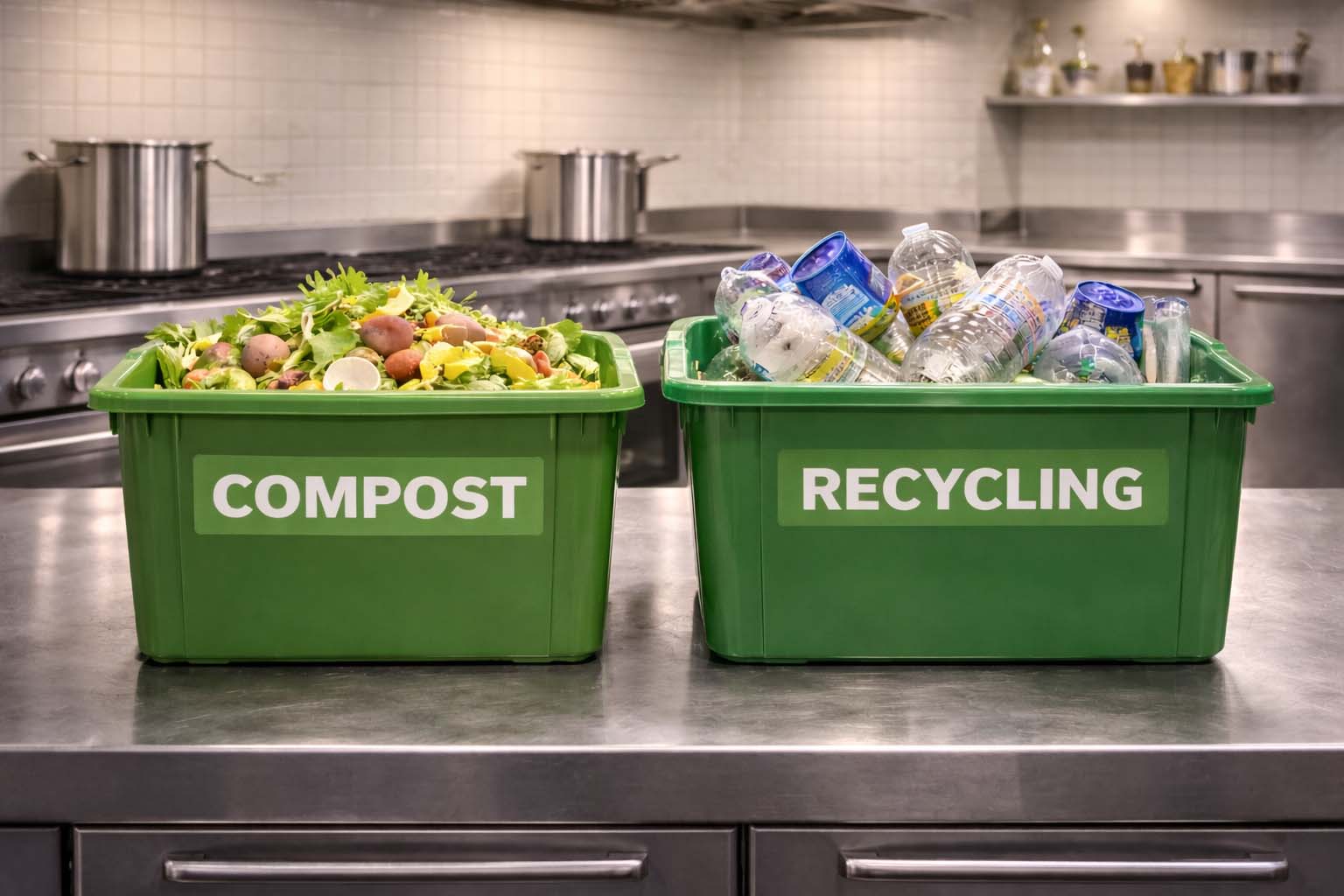
- Recycle: Set up clear, labeled stations for cardboard, glass, metals, and plastics. Partner with a local hauler like Metro or private services that cater to Portland businesses.
- Compost: Food scraps and compostable packaging make up a huge portion of kitchen waste. Diverting this from the landfill to a commercial composter reduces methane emissions and creates nutrient-rich soil. Portland has excellent infrastructure for commercial composting.
- Donation Programs: Partner with local organizations like Urban Gleaners or Meals on Wheels to safely donate unserved, edible food.
Implementing Sustainability in the Portland Metro Area
Portland offers unique resources to support your green transition:
- Energy Incentives: Check with the Energy Trust of Oregon for cash incentives, rebates, and expert advice on energy-saving upgrades for your business.
- Waste Resources: Portland Water Bureau offers conservation tips and may have programs for businesses. Metro provides extensive guides on recycling and composting regulations and finding service providers.
- Local Suppliers: Source from local farms and producers. This reduces "food miles" (the distance food travels, impacting its carbon footprint), supports the regional economy, and often means fresher ingredients with less packaging.
Taking the First Step: An Energy Audit
Begin your journey with a professional energy audit. This assessment identifies where your kitchen is wasting energy and provides a prioritized list of improvements. It’s the blueprint for an effective sustainability plan.
Sustainable kitchen design and retrofitting require careful planning and expertise. At PKNW Construction LLC, we help commercial clients across the Portland, Oregon metropolitan area integrate energy-efficient systems, optimize layouts for waste sorting, and select durable, sustainable materials that stand up to rigorous use.
If you have questions about implementing these practices in your facility or are planning a renovation with sustainability in mind, we are here to help. For a professional consultation, please feel free to reach out. If you’re immediately looking for project help, you can Request a Quote directly through our website at https://www.pknwconstruction.com/contact_us/index.htm. Let us help you build a kitchen that’s good for your business and our planet.